Custom Soil Mixing: Better Growth With DIY Blends
January 3, 2025
Decorative Rock: Complete 2026 Guide for Any Yard
February 10, 2026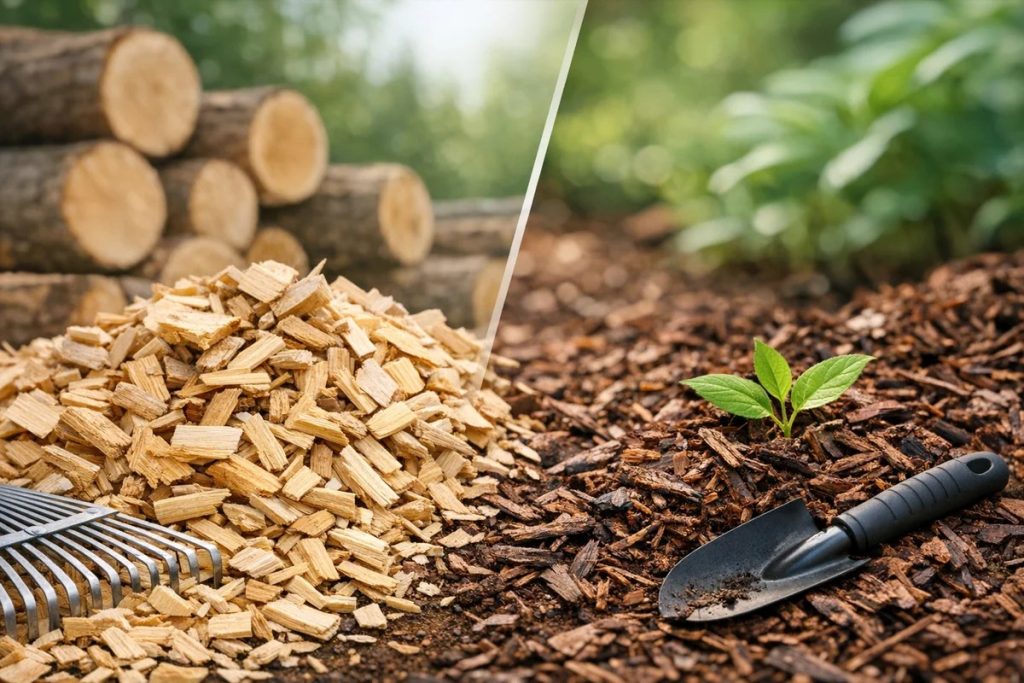
Woodchips and mulch in plain terms: what they do for your soil
Mulch is any protective layer you place on top of soil. Wood chips are one type of mulch, and they are commonly used to suppress weeds, hold moisture, and moderate soil temperature. When people talk about woodchips and mulch, they are usually trying to decide what to spread and where it will actually help.
The benefits are simple and noticeable: fewer weeds, steadier soil moisture between waterings, cooler roots in summer, and less soil splash onto leaves (which can help reduce some foliar disease issues). Mulch also helps slow erosion during heavy rain.
One important expectation: wood-based mulches change as they break down. How well wood chips for mulching perform depends on chip size, whether the chips are fresh or aged, and where you use them.
Wood chips vs mulch: the differences that actually matter in a garden
The common confusion is understandable. Wood chips are mulch, but not all mulch is wood chips. “Mulch” can also mean shredded bark, compost, leaf mold, straw, pine needles, and more. So when you search wood chips vs mulch (or mulch vs wood chips), the real question is usually: which material fits your goals and how often do you want to refresh it?
| Type | Longevity | Weed control | Soil-building speed | Best uses | Typical downsides |
|---|---|---|---|---|---|
| Wood chips (arborist chips) | Long | High when applied thickly | Moderate, steady | Trees, shrubs, perennials, paths | Can look “rough” fresh, can harbor slugs in wet shade |
| Shredded bark mulch (bagged “mulch”) | Medium | Medium to high | Moderate | Formal beds, slopes (depending on texture) | Can mat and shed water if compacted |
| Compost | Short | Low to medium | Fast | Vegetable beds, tired soil, topdressing | Needs frequent reapplication, weeds can germinate on top |
| Straw or leaf mulch | Short to medium | Medium | Fast to moderate | Vegetable gardens, seasonal protection | Blows around, may carry seeds (straw quality varies) |
Quick rule of thumb: bigger chips last longer and resist compaction. Finer mulches look tidier, but they can mat, break down faster, and sometimes create a crust that sheds water.
Difference between wood chips and mulch: what “mulch” includes beyond chips
The difference between wood chips and mulch is mostly about category versus specific material. Mulch can be shredded bark, composted mulch, leaf mold, or straw, and each shines in different places. Arborist chips tend to be chunkier and mixed species, while bagged “mulch” is often shredded bark and more uniform. Practical takeaway: choose based on the area (beds vs paths) and how often you want to refresh.
Woodchip mulch performance: lifespan, nutrients, and how it breaks down
Woodchip mulch breaks down more slowly than fine shredded mulches, which makes it excellent for long-term coverage. “Nitrogen tie-up” mainly happens right at the surface where microbes work on carbon, and it is usually not a problem if chips stay on top of the soil (not mixed in). Over time, many gardeners see improved soil structure and fungal activity, especially around perennials and trees, similar to a forest floor.
Are wood chips good mulch? Best places to use them and where to skip them
Yes, wood chips can be excellent mulch when used on top of the soil at the right depth and in the right locations. If your main goals are long-lasting weed suppression, steadier moisture, and less maintenance, wood chips are often a strong choice.
Best-fit scenarios include trees, shrubs, perennial beds, and informal paths where longevity matters. In these spots, chips act like a protective blanket and a slow, steady soil builder.
Skip, or use extra care, in seed-starting areas (chips can physically block tiny seedlings), very wet and shady spots prone to slugs, or places where you want rapid soil feeding. In those cases, compost or leaf-based mulches can be a better match, especially for short-term fertility boosts.
Using wood chips around trees and shrubs: better roots, fewer weeds
Create a wide donut-shaped mulch ring, ideally extending toward the drip line, and keep a bare gap around the trunk. A common target depth is about 2 to 4 inches in beds, then refresh as it settles. Keep chips fluffy rather than packed, and avoid the big mistake: piling mulch against bark (mulch volcanoes), which can trap moisture and invite rot and pests.
Wood chips in vegetable beds: when they help and when compost is better
Wood chips work well as a surface mulch around established transplants (tomatoes, peppers, squash) and in pathways between beds to reduce mud and soil splash. For direct-sown crops, straw or leaf mulch is often easier to pull aside for germination, and compost is better when you want quick fertility and fast soil building. If you are building or refreshing beds, starting with the right base soil or a blended mix can matter more than the top mulch layer. Simple tip: keep fresh chips back from delicate stems and never mix fresh chips into the bed soil.
How to apply wood chips for mulching in 5 simple steps
If you want reliable results from wood chips for mulching, application is everything. This method works for most beds, tree rings, and paths.
- Weed and remove large debris. Pull existing weeds and rake out sticks or trash so your layer sits evenly.
- Water the soil thoroughly. Mulch helps hold moisture, but it will not replace watering. Start with damp soil.
- Optional: add compost where you want fertility. A thin layer of compost under chips can help in perennial beds, but avoid piling compost or mulch against trunks.
- Spread chips evenly to the right depth. Use about 1 to 2 inches around small plants, 2 to 4 inches in beds for weed control, and 3 to 6 inches for paths (especially if you want long-lasting coverage).
- Keep a gap around plant stems and tree trunks. Leave a few inches of breathing room so crowns and bark stay dry and healthy.
Maintenance: expect settling over time, so top up when you see thin spots. Rake occasionally to prevent a crusted layer and to keep chips from compacting into a mat.
Mistakes with woodchips and mulch that cause pests, rot, or weeds
Most problems come from preventable habits: mulch volcanoes, too-thin coverage that lets weeds through, and over-mulching that holds too much moisture. Pest concerns are usually about moisture and wood-to-soil contact near structures, so keep chips away from foundations and maintain airflow. If weeds pop up anyway, hand pull, spot-solarize if needed, then re-mulch and edge to reduce seed blow-in.
Choosing safe woodchip mulch: fresh vs aged, sourcing, and red flags
Fresh chips last longer and resist breaking down quickly, but they can look rougher and feel bulkier to spread. Aged chips are darker, settle faster, and are often easier to spread evenly. They also tend to look more “finished” in a bed.
Sourcing options include arborist chips, municipal drop-offs, and bagged products. Ask what the load contains (mixed species is fine), whether leaves are included (often a plus for faster soil-building), and how long it has been stored. Safety checks matter: avoid loads with obvious treated wood pieces, chemical odors, or unknown contamination risks, and be cautious with any material that looks like construction debris.
Mulch vs wood chips for appearance: color, texture, and cleanup
For aesthetics, shredded bark mulch usually looks more uniform, while arborist chips look more natural and vary in size and color. Practically, finer mulches can track more easily on shoes and paws, while chunkier chips often stay put better on slopes and during heavy rain. Dyed mulch is a preference call. It can provide consistent color, but it may transfer color during the first few rains and it does not improve performance by itself.
Woodchips and mulch FAQs and a simple next step
If you are still deciding between materials, start small. Pick one target area (a tree ring, a perennial bed, or a garden path) and apply a correct-depth layer. You will often notice fewer weeds and steadier moisture fairly quickly.
Are wood chips good mulch for vegetables?
Yes, wood chips can work as a surface mulch around established vegetable transplants and in garden pathways, but they are often less convenient for direct-sown seeds. Keep chips on top of the soil, pull them back from stems, and consider compost or straw when you want faster soil feeding or easier seeding.
What is the difference between wood chips and mulch?
Mulch is a broad category that includes many materials (wood, compost, leaves, straw), while wood chips are one specific type of mulch. The biggest practical differences are texture and how long they last. Wood chips are typically chunkier and longer-lasting than many bagged shredded mulches.
Wood chips vs mulch: which is better for weed control?
For long-term weed suppression, wood chips often perform very well because they form a thicker, longer-lasting layer. The best choice still depends on placement and depth. Any mulch needs an even layer and consistent coverage to block light and stop weed seeds from sprouting.
Can woodchip mulch attract termites or ants?
Woodchip mulch can create moist habitat for insects, but termites are more strongly linked to persistent moisture and wood-to-soil contact near structures. Keep mulch several inches away from foundations, avoid over-watering, and maintain a clear gap around trunks and siding to reduce risk.
Want a low-maintenance mulch plan that fits your yard?
Call (909) 627-7481 or visit our Chino yard at 5675 Francis Ave. If you are also planning planters or custom blends, you may find these DIY potting soil recipes and custom soil mixing tips helpful. You can also reach O.F. Wolfinbarger Inc. through our contact page.