How Much Soil Do I Need for a Raised Bed? Easy Calculator
October 18, 2026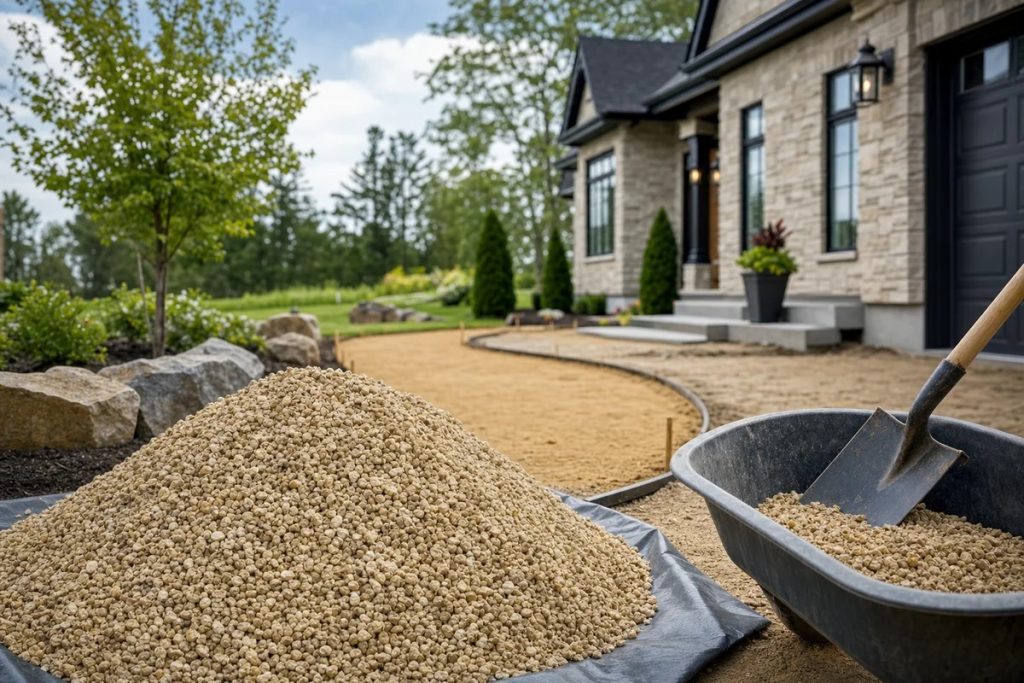
Get your answer fast: how much gravel do I need
A gravel calculator estimates the volume of gravel needed based on area and depth, then converts it into cubic yards so you can order the right amount. The same method works for decomposed granite (DG), with a small adjustment for compaction. Once you know your cubic yards, you can match it to how bulk landscape materials are commonly sold.
In other words, when you ask “how much gravel do I need,” the practical answer is usually “X cubic yards,” because that is the standard unit most suppliers quote for bulk deliveries.
One more expectation to set: you will almost always want to round up a bit for settling, spillage, and small leveling tweaks, especially on long runs like driveways and paths.
Gravel volume formula for cubic yards
If you want the fastest answer, this is the exact math most tools labeled gravel calculator use:
- Cubic feet = length (ft) x width (ft) x depth (ft)
- Cubic yards = cubic feet ÷ 27
When you already have square footage (or it is easier to measure that way), use the area-first version: square feet x depth (ft) = cubic feet, then divide by 27 to get cubic yards.
Quick conversions: inches to feet, cubic feet to cubic yards
Depth is where most “calculate gravel needed” estimates go wrong, because inches and feet get mixed. Here are the common conversions:
- 2 in = 0.167 ft
- 3 in = 0.25 ft
- 4 in = 0.333 ft
- 6 in = 0.5 ft
Reminder: 1 cubic yard = 27 cubic feet.
Cheat line to screenshot: Cubic yards = (L x W x (DepthInches/12)) / 27
Measure your area like a gravel calculator
To measure like a gravel calculator, you only need a few inputs: your area shape (rectangle, circle, or “odd”), length, width, finished depth, and whether you are adding a separate base layer. The most common mistakes are mixing inches and feet, measuring only the widest point (instead of an average width), and ignoring flare at driveway entrances where the opening widens.
A tape measure plus a quick sketch (even in phone notes) helps you repeat measurements and double-check the math before you order.
Pick the right depth for a driveway, path, or patio
Depth depends on how the space is used (foot traffic vs wheelbarrows vs passenger vehicles), your drainage goals, and what you already have under it (firm gravel base vs soft soil). For example, a decorative gravel patio might look fine at 3 to 4 inches, but a light-duty driveway often needs more structure, especially on weaker subgrade. If you are building in layers, you may be calculating two materials (base rock plus surface gravel), which changes your total order.
| Project | Typical Gravel Depth | Notes |
|---|---|---|
| Pathway | 2 to 3 inches | Often over compacted base or existing firm soil |
| Patio base (under pavers) | 4 to 6 inches | Usually crushed stone base, then leveling layer |
| Gravel patio surface | 3 to 4 inches | Consider edging to hold material in place |
| Driveway (light duty) | 4 to 6 inches | More depth for weak subgrade |
Base vs top layer tip: A driveway might have a thicker base layer of crushed stone for strength, then a thinner top layer for appearance and smoother driving. You can (and often should) calculate each layer separately so you know what to order of each product.
Rectangle, circle, and odd shapes: finding square footage
Most projects are simple rectangles. For a rectangle or square (typical driveways and many patios), square footage = length x width. For a circle (fire pit patios or round sitting areas), area = π x radius², with radius measured from the center to the edge. For irregular areas, split the shape into smaller rectangles or triangles, calculate each one, and add them up. This approach is especially helpful for winding paths where width varies along the route.
Step by step to calculate gravel needed
You can do this process on paper, in a spreadsheet, or with any gravel calculator; it is the same math either way. The key is unit consistency: get your length, width, and depth into feet before converting to cubic yards. If you have ever wondered why people under-order, depth is usually the reason.
The 5-step gravel quantity calculator method
- Measure length and width (in feet)
- Calculate square footage (length x width)
- Choose depth (in inches) and convert to feet (inches ÷ 12)
- Multiply: square feet x depth (ft) = cubic feet
- Convert: cubic feet ÷ 27 = cubic yards
Optional Step 6 (multiple layers): If you are installing a base plus a topping layer, repeat the same math for each layer depth, then order each material separately.
One-line formula: (L x W x (DepthInches/12)) / 27
How much extra gravel to order for compaction and waste
A solid rule of thumb is to add 10 to 15 percent for settling, compaction, and small grading adjustments. Consider 15 to 20 percent if the ground is very uneven, the install is deep, the driveway is long, or you are spreading for the first time.
If you are within a few tenths of a yard, it is usually smarter to round up to the next half yard or full yard based on delivery minimums and how precisely you can spread the material.
Examples: how many cubic yards of gravel do I need
Use these as copy-and-modify templates. Swap in your own length, width, and depth, then apply the same conversion and overage so the process stays consistent when you ask, “how many cubic yards of gravel do I need?”
Driveway example calculation
Example: 12 ft x 40 ft driveway at 4 inches depth.
- Square footage: 12 x 40 = 480 sq ft
- Depth in feet: 4 in = 0.333 ft
- Cubic feet: 480 x 0.333 = ~160 cu ft
- Cubic yards: 160 ÷ 27 = ~5.9 cu yd
Now add overage for leveling and compaction: 5.9 x 1.10 = ~6.5 cubic yards. In real ordering terms, that often means ordering 6.5 to 7 yards, depending on supplier increments and delivery minimums. This is a practical way to answer “how much gravel do I need for a driveway” without guessing.
Path and patio examples you can copy
Path example: 3 ft wide x 30 ft long at 3 inches depth.
- Square footage: 3 x 30 = 90 sq ft
- Depth in feet: 3 in = 0.25 ft
- Cubic feet: 90 x 0.25 = 22.5 cu ft
- Cubic yards: 22.5 ÷ 27 = ~0.83 cu yd
Patio example: 10 ft x 12 ft at 3 inches depth for a loose gravel surface.
- Square footage: 10 x 12 = 120 sq ft
- Depth in feet: 3 in = 0.25 ft
- Cubic yards: (120 x 0.25) ÷ 27 = ~1.11 cu yd
- Add 10% overage: 1.11 x 1.10 = ~1.22 cu yd
If you are building a paver patio base, calculate the base and leveling layers separately, because “how much gravel do I need for a patio” changes a lot depending on whether it is a loose surface or a structural base under pavers.
Decomposed granite calculator notes
A decomposed granite calculator uses the same method: convert area and depth into cubic yards, then plan your order. What changes is that DG often compacts more than decorative gravel, and stabilization products can affect finished thickness. That is why DG projects benefit from a practical ordering adjustment.
Compaction, stabilization, and base layers for DG
Plan for noticeable settling with DG. Depending on moisture, lift thickness, and how aggressively you compact, ordering 10 to 20 percent extra is common when figuring out “how much decomposed granite do I need.”
If you are using stabilized DG, follow the stabilizer product guidance for lift thickness and compaction steps so you avoid soft spots. Also remember the base layer: for DG paths and patios, a compacted base (often crushed stone) usually improves performance and drainage, a point frequently emphasized in roadway and aggregate guidance from groups like the Federal Highway Administration.
DG coverage per cubic yard compared to gravel
At the same depth, a cubic yard covers the same area in theory. In practice, DG can end up thinner after compaction, so if you are between two order sizes, DG is a good reason to round up. Good drainage and edging reduce material migration over time, which can also reduce future top-offs.
Ready to order? Turn your number into a delivery plan
Once you have cubic yards, think about how suppliers actually sell and deliver material: delivery minimums, half-yard increments, and sometimes split loads if you need two products. Confirm access for dump trucks, decide where the pile should go, and consider how far you will be moving material by wheelbarrow.
A simple habit that prevents headaches: measure one more time, then place your order slightly above your calculated need, especially if your site has low spots that will “eat” the first layer.
Bulk delivery vs bags: what to choose
Bulk is usually best for driveways and larger patios because the price per cubic yard is often better and placement is faster. Bags make sense for small paths, touch-ups, or limited access areas. As a practical threshold, once you are near 1 cubic yard, compare bulk delivery pricing against the total cost of multiple bags.
Questions to ask your gravel supplier before you pay
Confirm the product details: gravel size and type, how much fines content it has, and whether it compacts (especially important for driveway top layers and DG). Ask about delivery options like dump location, tailgating for driveways, and any fees for tight access. Finally, verify the units: whether you are ordering by cubic yard or by ton, and ask what conversion factor they recommend for that specific material.
Make the math easy on yourself for the next project
If you can measure accurately and keep units consistent, you can answer “how much gravel do I need” for almost any layout. If you would rather talk through next steps for a gravel or DG project, call (909) 627-7481 or visit our Chino yard at 5675 Francis Ave. You can also reach O.F. Wolfinbarger Inc. through our contact page.
Gravel calculator FAQs
How much gravel do I need for a driveway in cubic yards?
Measure length and width, pick a typical driveway depth (often 4 to 6 inches), then use (L x W x (inches/12)) / 27 to get cubic yards. Add 10 to 15 percent, then round up to match supplier delivery increments.
How much gravel do I need for a patio at 2 to 4 inches deep?
Loose gravel patios often use 3 to 4 inches, while bases under pavers can be deeper and built in layers. If you are doing a base plus a topping layer, calculate gravel needed for each layer separately and add the cubic yards.
How much gravel do I need for a path that is 3 feet wide?
Use the shortcut: cubic yards = (path length x 3 ft x depth in feet) / 27. Edging helps keep the installed depth consistent and reduces future top-offs along the path.
How much decomposed granite do I need and does it compact more than gravel?
The method is the same as a gravel calculator, but DG can compact noticeably, so ordering a bit extra is common. Plan on roughly 10 to 20 percent overage and follow installation guidance closely for stabilized DG.
How do I convert tons of gravel to cubic yards?
It depends on material density, so ask your supplier for the tons-per-yard figure for that specific gravel. Once you have it, cubic yards = tons ÷ (tons per yard), then add overage if your project needs it.