How to Remove Dirt From Landscape Rock
October 18, 2026
How Much Gravel Do I Need? A Simple 2026 Guide
October 18, 2026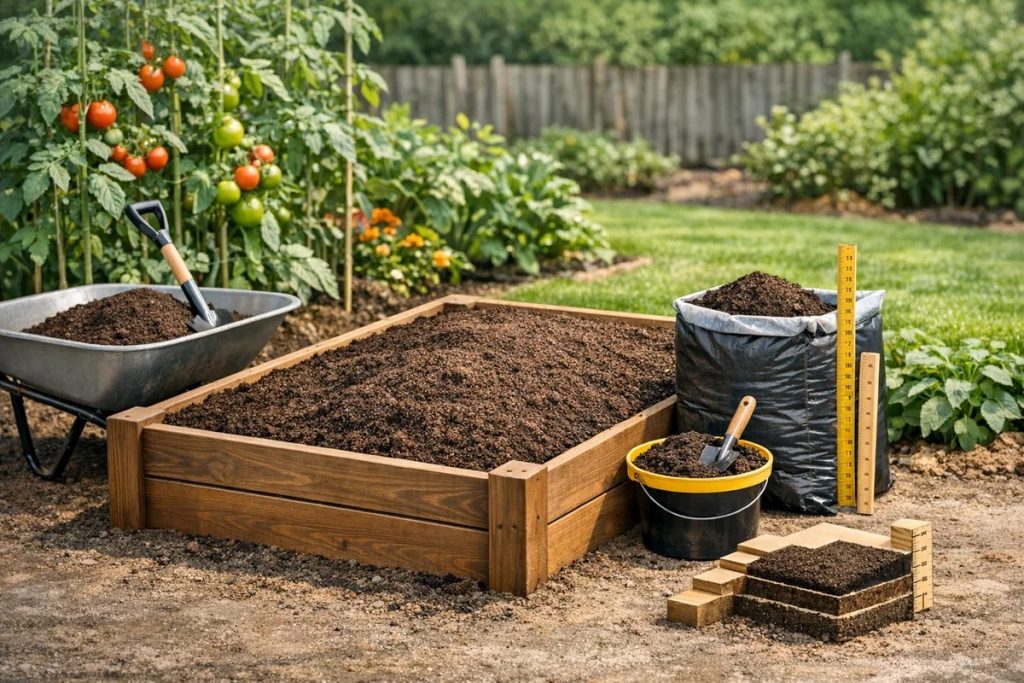
Soil math that makes filling a raised bed easy
If you’re wondering how much soil do I need for a raised bed, you’re really calculating raised bed soil volume. The basic idea is simple: multiply length x width x soil depth to get volume, then convert that number into cubic feet, cubic yards, or bags depending on how you plan to buy soil (for example, in bulk from a soil supplier or in bagged mix).
The good news is the same method works for any bed size and any fill depth, whether you’re figuring out how much soil for a raised garden bed that’s 2 x 4 or a big 4 x 10. Below you’ll also find a quick cubic yards plus depth chart so you can skip the math for common sizes.
Most miscalculations happen because people forget depth, ignore settling, or mix bag sizes (1.5 cu ft and 2 cu ft) without recalculating.
Step-by-step raised bed soil calculator you can do on paper
You don’t need an app for a raised bed soil calculator. Use the same variables every time: L (length), W (width), and D (soil depth). The biggest make-or-break detail is units: beds are often measured in feet, but depth is usually in inches, so converting D to feet matters most.
- Measure inside dimensions: L and W (in feet).
- Choose soil depth D, convert inches to feet (divide by 12).
- Compute volume in cubic feet, then convert to cubic yards or bags.
Step 1: Measure your raised bed and pick a soil depth
Before you calculate soil for raised beds, do a quick check so your numbers match what you’ll actually fill.
- Measure the inside length (L), not the outside of the boards.
- Measure the inside width (W).
- Choose your planned soil depth (D) based on what you’ll grow.
- Decide on headspace: are you filling to the rim, or leaving 1 to 2 inches for mulch and watering?
Convert depth from inches to feet by dividing by 12. Examples: 6 in = 0.5 ft, and 12 in = 1 ft.
Tip: If the ground under the bed is uneven, measure depth at the shallowest point and plan a small buffer. It’s better to order slightly extra than come up short halfway through leveling.
Step 2: Calculate raised bed soil volume in cubic feet
Here’s the core formula for soil needed for raised bed projects:
Cubic feet = L (ft) x W (ft) x D (ft)
Example for a common bed, 4 ft x 8 ft:
- At 6 inches deep (0.5 ft): 4 x 8 x 0.5 = 16 cubic feet
- At 12 inches deep (1 ft): 4 x 8 x 1 = 32 cubic feet
That’s why forgetting depth is such a common mistake: doubling the depth doubles the soil. If your bed is measured in inches, either convert L and W to feet first, or convert everything to inches and then convert cubic inches to cubic feet (divide by 1,728).
Step 3: Convert cubic feet to cubic yards and add extra
If you’re ordering bulk, you’ll usually buy by the yard. Use this conversion:
Cubic yards = cubic feet ÷ 27
Now add a buffer. Soil settles after watering, and “fluffy” bagged mixes compact when you spread and level them. Plan to order 10% to 15% extra for settling, spillage, and fine-tuning the grade.
Ordering tip: Many suppliers sell in 0.25-yard increments (or similar). After you calculate, round up to the nearest increment your supplier offers, especially if you’re close.
Cubic yards and depth chart for common raised bed sizes
Want the shortcut? Use this chart to estimate how many cubic yards of soil for a raised bed you’ll need. Values are based on inside dimensions, and cubic yards are rounded to two decimals for readability. For best results, still add 10% to 15% extra for settling.
| Bed size (ft) | Depth | Soil needed (cu ft) | Soil needed (cu yd) |
|---|---|---|---|
| 2 x 4 | 6 in | 4 | 0.15 |
| 2 x 4 | 8 in | 5.33 | 0.20 |
| 2 x 4 | 12 in | 8 | 0.30 |
| 2 x 4 | 18 in | 12 | 0.44 |
| 3 x 6 | 6 in | 9 | 0.33 |
| 3 x 6 | 8 in | 12 | 0.44 |
| 3 x 6 | 12 in | 18 | 0.67 |
| 3 x 6 | 18 in | 27 | 1.00 |
| 4 x 4 | 6 in | 8 | 0.30 |
| 4 x 4 | 8 in | 10.67 | 0.40 |
| 4 x 4 | 12 in | 16 | 0.59 |
| 4 x 4 | 18 in | 24 | 0.89 |
| 4 x 8 | 6 in | 16 | 0.59 |
| 4 x 8 | 8 in | 21.33 | 0.79 |
| 4 x 8 | 12 in | 32 | 1.19 |
| 4 x 8 | 18 in | 48 | 1.78 |
| 4 x 10 | 6 in | 20 | 0.74 |
| 4 x 10 | 8 in | 26.67 | 0.99 |
| 4 x 10 | 12 in | 40 | 1.48 |
| 4 x 10 | 18 in | 60 | 2.22 |
How deep should soil be in a raised garden bed
Depth depends on what you’re growing. For shallow-rooted greens and herbs, 6 to 8 inches is often enough. Many common vegetables do well around 10 to 12 inches, while carrots, potatoes, and other deep-rooted crops are often happier with 12 to 18 inches of workable soil.
The tradeoff is practical: deeper soil holds moisture better and gives roots more room, but it costs more and takes longer to fill. Also plan to leave a little headspace at the top for compost top dressing and mulch, rather than filling to the rim.
How many bags of soil for a raised bed vs buying in bulk
Once you know the cubic feet, you can decide whether bags or bulk makes more sense. Bags are convenient for small beds, tight access (no place for a dump truck), and small touch-ups. Bulk is often the better deal per volume when you’re filling multiple beds, filling a tall bed, or you just want to get it done in one trip.
To estimate how many bags of soil for a raised bed, use this quick formula:
Bags needed = total cubic feet ÷ bag size (cu ft)
Just be consistent with bag sizes. Mixing 1.5 cu ft and 2 cu ft bags in the same calculation is a classic way to run short. If you do buy mixed sizes, calculate each size separately and add them up.
Bag size conversions to cubic feet and cubic yards
Here’s a cheat sheet that helps you switch between bag math and bulk orders:
- 27 cu ft = 1 cu yd
- Typical bag sizes: 1.5 cu ft, 2 cu ft, 3 cu ft
- Bags per cubic yard (approx.): 1.5 cu ft = 18 bags, 2 cu ft = 14 bags, 3 cu ft = 9 bags
Practical example: If you need 1.2 cu yd, that’s 1.2 x 27 = 32.4 cu ft. With 2 cu ft bags, 32.4 ÷ 2 = 16.2 bags, so you’d buy 17 bags (plus a little extra for settling), which is where bulk starts looking easier.
Best soil mix for raised garden beds so plants thrive
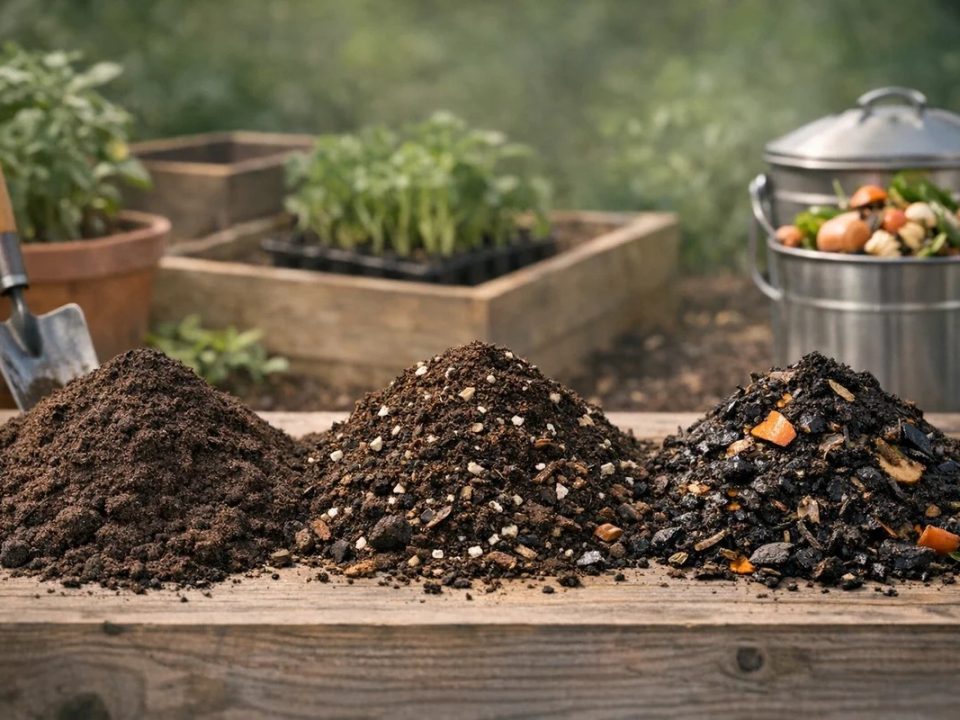
When you order soil, pay attention to what you’re actually getting. “Topsoil,” “garden soil,” “raised bed mix,” and “compost blend” can mean very different things depending on the supplier, and the label affects drainage and nutrients. Many state university extension services emphasize that raised beds need a mix that drains well but still holds moisture, which is why one single ingredient rarely performs as well as a blend.
A simple starter concept is:
- Structure: screened topsoil or a soil-based mix that holds shape
- Fertility: quality compost for organic matter and nutrients
- Aeration (if needed): a coarse material to keep the mix from compacting
Different mixes settle differently, especially compost-heavy blends. That’s another reason the 10% to 15% buffer helps, even when your math is perfect.
Filling tall beds affordably with a bottom layer
If you have a very tall bed (think 18 inches or more), you can reduce cost by using a safe bottom layer of woody debris, leaves, and rough compostables, similar to hugelkultur-style filling. Avoid this in tiny beds or if you want immediate, uniform soil for root crops in the first season.
Keep the top layer as quality growing mix. If you’re not filling 100% with soil, base your calculations on the depth of the top growing zone (for example, the top 12 inches), not the full bed height. For recipe ideas and ratios, see these DIY potting soil and custom soil mixing recipes.
Ordering soil delivery for raised beds without guessing
Bulk delivery can be a huge time-saver, but it goes smoother when you show up with clear numbers. Here’s what to tell your supplier:
- Cubic yards needed (after you convert from cubic feet)
- Soil type requested, such as raised bed mix vs screened topsoil plus compost
- Placement preference, dumped in the driveway, on a tarp, or placed closer to the beds (if offered)
Also think through access: driveway width, overhead clearance, where the pile can safely go, and how far you’ll wheelbarrow soil. Ordering slightly over your calculated amount makes leveling easier and helps account for settling after the first few waterings.
Mistakes that lead to too much or too little soil
The most common issues are using outside dimensions instead of inside, forgetting to convert inches to feet, and not accounting for leaving 1 to 2 inches of headspace. If you ordered short, top off with compost and re-level. If you ordered extra, store it covered, build another bed, or save it for top dressing later in the season.
Raised bed soil FAQs and quick answers
How many cubic yards of soil do I need for a 4×8 raised bed?
A 4×8 bed is 32 sq ft. At 6 inches deep, you need 16 cu ft, which is about 0.59 cu yd, and at 12 inches deep, you need 32 cu ft, about 1.19 cu yd. Add 10% to 15% extra for settling and leveling.
Do I fill a raised bed all the way to the top?
Usually no; leave about 1 to 2 inches of space for watering, compost top dressing, and mulch. If you fill to the rim, expect the soil to settle and drop after the first few waterings.
What if my raised bed is a different shape or has corners cut out?
Break the bed into rectangles, calculate each section (L x W x D), then add them together. For curved beds, estimate the square footage first, multiply by depth in feet to get cubic feet, then convert to cubic yards.
What should I do after I calculate how much soil I need for my raised bed?
Decide whether you’re buying bagged soil or ordering bulk, add a 10% to 15% buffer, then choose a raised-bed-friendly mix with good drainage and compost. If you’re close to a full yard, pricing out delivery often saves money and time.
What’s the easiest way to figure out how much soil do I need for a raised bed?
Use the formula L (ft) x W (ft) x D (ft) to get cubic feet, then divide by 27 for cubic yards if you’re ordering in bulk. If you’re buying bags, divide total cubic feet by the bag size to estimate how many bags you need.
Ready to fill your beds without a second trip?
If you’ve done the math and you’re still not sure what mix to order or how to plan delivery, call (909) 627-7481 or visit our Chino yard at 5675 Francis Ave. You can also reach O.F. Wolfinbarger Inc. through our contact page.